


Pillar 1: Offensive Architecture and Skill Adaptability
A prospect’s collegiate tape rarely translates seamlessly to NBA floor geometry. The transition from the packed paint of the NCAA to the wide-open spaces of the NBA requires rapid adjustments in processing speed, shot mechanics, and spatial awareness.
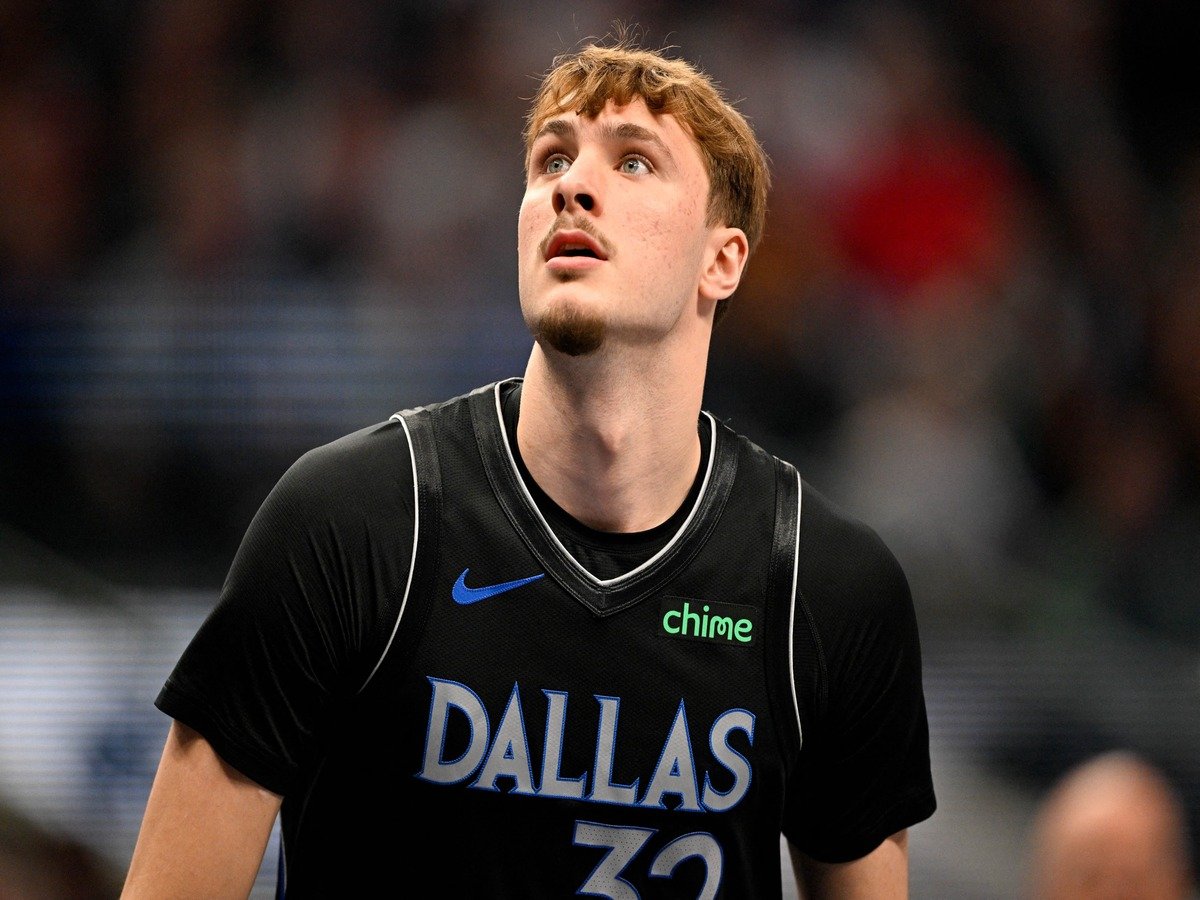
Cooper Flagg: The High-Post Hub and Connector
When the Dallas Mavericks integrated Cooper Flagg into their system, the immediate question was whether he would act primarily as a play finisher or a play generator. Standing 6’9″ with a sprawling wingspan, Flagg’s offensive profile as a rookie evolved into a dynamic hybrid of both.
Rather than relegating him to a standard floor-spacing role, the Mavericks utilized his high basketball IQ by turning him into a high-post hub. Flagg adapted to the speed of NBA closeouts by optimizing his triple-threat connectivity. His rookie campaign was defined by a calculated patience:
Playmaking from the Elbow: Flagg excelled in delayed transition and secondary break scenarios. When catching the ball at the elbow, his height allowed him to look over collapsing defenses. He regularly hit baseline cutters and weak-side shooters, functioning as a pressure-release valve.
The Short-Roll Progression: In pick-and-roll variations, when opponents aggressively blitzed or showed high on ball handlers, Flagg became lethal in short-roll distribution. His soft hands allowed him to catch passes in traffic, take a single, calculated power dribble, and either drop off an assist to the dunker spot or convert floaters over rotating rim protectors.
Self-Creation Constraints: While his playmaking flourished, Flagg’s primary developmental hurdle remained his off-the-dribble self-creation against elite, length-oriented wing defenders. His handle, while functional for a frontcourt connector, occasionally grew loose when forced into multi-directional counter moves in isolation.
Ace Bailey: Boundary Scoring and Shot Selection
For Airious “Ace” Bailey in Utah, the offensive mandate was vastly different. Possessing prototypical wing size combined with rare, fluid shot-creation mechanics, Bailey was drafted to inject dynamic isolation and shot-making juice into the Jazz’s perimeter rotation.
Bailey’s rookie scoring output showed flashes of absolute dominance, balanced by the predictable growing pains of an eighteen-to-nineteen-year-old volume scorer:
The Vertical and Lateral Separation: Bailey’s ability to create a clean look out of standard side-isolation sets was immediately apparent. He possesses a highly functional crossover and step-back package that leverages his stride length to create massive separation. His pull-up jumper out of middle pick-and-roll sets became a reliable weapon when defenses dropped to protect the paint.
The Efficiency Tax: The greatest challenge for Bailey was navigating the shot-selection hierarchy. In the open floor, he was an absolute train, utilizing his frame to absorb contact and finish above the rim. However, in half-court environments, he frequently settled for heavily contested, mid-range turnarounds early in the shot clock.
Rim Pressure vs. Perimeter Settling: The analytical profile of Bailey’s rookie year highlighted a heavy reliance on tough twos. When he committed to hard straight-line drives, he forced rotations and got to the free-throw line. When he settled for pull-ups against length, his efficiency metrics dipped. Refining his handle to navigate tight stymied gaps remains his highest-priority offensive objective.
Pillar 2: Defensive Scalability and Mapping Systems
Defensive adaptation is typically the steepest learning curve for any high-lottery pick. Rookie wings and bigs must learn to defend complex screen-and-roll actions while simultaneously communicating structural weak-side rotations.
Flagg's Weak-Side Help Route:
[Perimeter Ball Handler] ──> Drives Paint ──> [On-Ball Defender Recovers]
                                                    │
                                         (Flagg Rotates from Weak-Side)
                                                    ▼
                                         [Meet at Rim / Contest / Block]
Cooper Flagg: Elite Weak-Side Rotation and Rim Protection
Flagg did not just survive defensively as a rookie; he actively dictated terms. His impact on the defensive end was a cornerstone of his Rookie of the Year campaign. The Mavericks capitalized on his generational weak-side instincts by deploying him in roles that optimized his ground coverage.
The “Low-Man” Specialist: Flagg’s primary defensive value manifested in his understanding of weak-side help shell concepts. As the “low man” in pick-and-roll coverage, his processing speed allowed him to recognize driving lanes before the offensive player committed their strides. He routinely rotated from the opposite block to meet drivers vertically at the apex of their jump.
Switchability and Perimeter Containment: Beyond rim protection, Flagg demonstrated a rare capacity to slide his feet on the perimeter. When switched onto dynamic guards, he maintained a calculated cushion, utilizing his length to contest pull-up jumpers without biting on initial ball fakes. His lateral quickness allowed him to contain containment drives, forcing guards into tough kick-out passes.
Ace Bailey: On-Ball Metrics and Off-Ball Navigation
Ace Bailey’s defensive profile with the Jazz showed a prospect with immense physical tools who is actively grinding through the micro-habits of NBA team defense. With his broad shoulders and elite lateral twitch, Bailey proved he could lock down individual matchups when properly motivated.
Point-of-Attack Resistance: When tasked with guarding primary scoring wings, Bailey utilized his chest and wingspan to disrupt standard operating spaces. He showed excellent recovery speed when caught on initial steps, using his trailing length to contest shots from behind.
The Off-Ball Learning Curve: The primary areas of variance for Bailey occurred off the ball. Like many young volume scorers, he occasionally suffered from “ball-watching,” leading to back-door cuts or late closeouts on weak-side shooters. Navigating complex double-staggered screens and off-ball pin-downs tested his lower-body discipline, sometimes causing him to pick up avoidable reach-in fouls as he attempted to recover.
Pillar 3: Physical Condensation and Athletic Thresholds
The sheer physical toll of an 82-game regular season is something no collegiate program can truly replicate. Moving from a 30-to-35 game schedule against amateur athletes to an unrelenting slate against grown men requires drastic physical and nutritional maturity.
The Grinding Calendar
For both Flagg and Bailey, the “rookie wall” was a tangible reality that hit around late January. The constant travel, combined with high-intensity minutes, altered their athletic baselines:
Core Strength and Post Accountability: Flagg’s frame, while lean and exceptionally functional, faced challenges when matched against physical, low-post bruisers. When forced to battle for interior position against heavy-bodied centers, he had to give up ground, relying on his timing and verticality to disrupt plays rather than raw strength.
Functional Deceleration: For Bailey, the physical development centered on learning how to decelerate. His explosive vertical leap was never in question, but stopping on a dime out of a full-speed drive without committing an offensive charge or turning over his ankles required immense core and lower-extremity stabilization work.
Pillar 4: Franchise Alignment and Future Projections
A rookie’s statistical output is deeply tied to their organizational ecosystem. The developmental timelines of Dallas and Utah provided distinct backdrops for how these two foundational pieces were utilized.
| Attribute | Cooper Flagg (DAL) | Ace Bailey (UTA) |
| Primary Systemic Role | Defensive Anchor / Frontcourt Hub | Perimeter Creation / High-Volume Scoring |
| Usage Rate Variance | Stable (19% – 22%) | High-Fluctuation (24% – 28%) |
| Pick-and-Roll Role | Short-Roll Shortstop / Screener | Ball Handler / Isolation Operator |
| Defensive Responsibility | Weak-Side Rim Protection / Switching | Point-of-Attack On-Ball Containment |
| Developmental Priority | Off-the-Dribble Jump Shot Consistency | Half-Court Shot Selection & Off-Ball Discipline |
The Mavericks’ Ecosystem
In Dallas, Flagg entered a framework designed for immediate structural impact. He was not asked to shoulder an unfeasible scoring burden, which allowed him to focus his energy on anchoring the defense and executing high-efficiency offensive plays. This systemic stability elevated his advanced analytics, making him an incredibly impactful winning player from day one.
The Jazz’s Retooling Phase
Utah presented Bailey with a longer developmental leash. The franchise embraced the variance of his high-volume scoring style, understanding that structural growth requires letting a player work through mistakes in real-time. His All-Rookie Second Team selection reflects a player with an undeniably high ceiling who is actively learning how to turn raw elite talent into disciplined efficiency.
Final Scout Takeaways
The initial campaigns of Cooper Flagg and Ace Bailey have firmly validated their status as elite building blocks. Flagg projects as a multi-time All-Defensive engine who can anchor a high-functioning offense through his connective passing and high-IQ play. Bailey possesses the definitive athletic and mechanical profile of a classic, high-volume perimeter closer. As both players enter their first full NBA off-season to build out their functional strength and technical counters, they are positioned to dictate the tactical landscape of the league for the next decade.
For a comprehensive video breakdown detailing their game-by-game adjustments, collegiate-to-pro tape transitions, and rookie highlights, check out The 2026 NBA Draft Lottery and Rookie Review. This video provides an in-depth visual breakdown of how these elite prospects project as long-term cornerstones within their respective franchises.